Recently,aresearchteam led by tenured Associate Professor Zhou Hangfrom the School of Electronic and Computer Engineeringin Peking University Shenzhen Graduate Schoolpublished a research paper titled“Reconfigurable, Self-Adaptive Organic−Metal Oxide Hybrid Phototransistors for Highly Sensitive Photosensing and In-Sensor Image Preprocessing”intheACS Nano(ImpactFactor:16.1). This study demonstrates a reconfigurable organic−metal oxide hybrid phototransistor capable of highly sensitive photosensing and in-sensor image preprocessing.
Reconfigurable optoelectronic devicesthatintegratephotosensing and in-sensor computing functionsofferapromisingstrategyto overcome the von Neumann bottleneck andenablethe miniaturization andintegrationof next-generationoptoelectronic systems. Organic−metal oxide hybrid phototransistors (HPTs) with gate-tunable photoresponse and heterointerfacial photogating effects are promising candidates for developing reconfigurable intelligent optoelectronic systems. However, achieving reconfigurability in organic−metal oxide HPTs remains a critical challenge due to the insufficient understanding of the modulation methods for the heterointerfacialphotocarrierdynamics and gate-tunable photoresponse.
This workdemonstratesa reconfigurable IGZO/D18:L8-BO HPTthatenables gate-tunable dual-mode operation, includinghighly sensitive photosensing and in-sensor image preprocessing. The synergistic modulation by gate bias and light intensity enables tunable photocarrier trapping dynamics and bipolar photogating effect at the organic−metal oxide heterointerface, providing the HPT with reconfigurability and self-adaptability. The positive photogating effect induced by photoexcited hole trapping under negative gate voltage enables the HPT to function as a highly sensitive photodetector with a dark current shot noise-limited specific detectivityD* exceeding 1014Jones. The light-intensity-modulated bipolar photogating effect under positive gate voltage endows the HPT with self-adaptability to external light intensity, achieving light-intensity-adaptive bidirectional photoresponse for in-sensor image denoising. This work provides in-depth physical insights into the modulation of heterointerfacial photocarrier trapping dynamics in organic−metal oxide HPTs andastrategy to develop reconfigurable, self-adaptive optoelectronics.
Prof. Zhou Hang (Tenured Associate Professor) and Dr. Wu Jiahao (Postdoctoral Fellow) are the corresponding authors , and Li Zuhao, a master’s student(class of 2023)is the first author. This work was financially supported by the Guangdong Provincial Key Laboratory of In-Memory Computing Chips and the Shenzhen Science and Technology Innovation Committee Program.
Link:https://pubs.acs.org/doi/10.1021/acsnano.5c18429
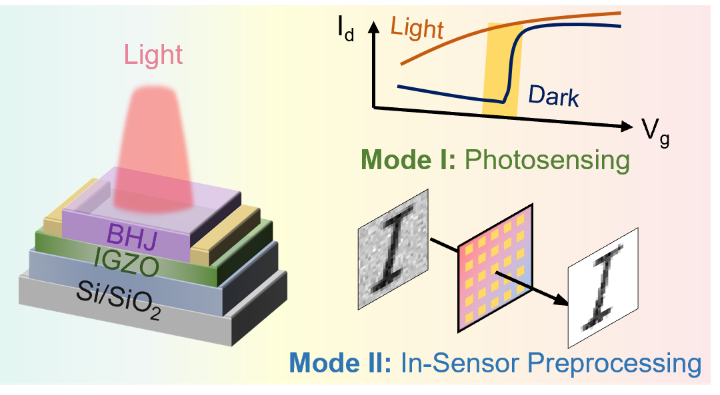
Figure 1.Device Structure and dual-modeoperationofthe IGZO/D18:L8-BO HPT
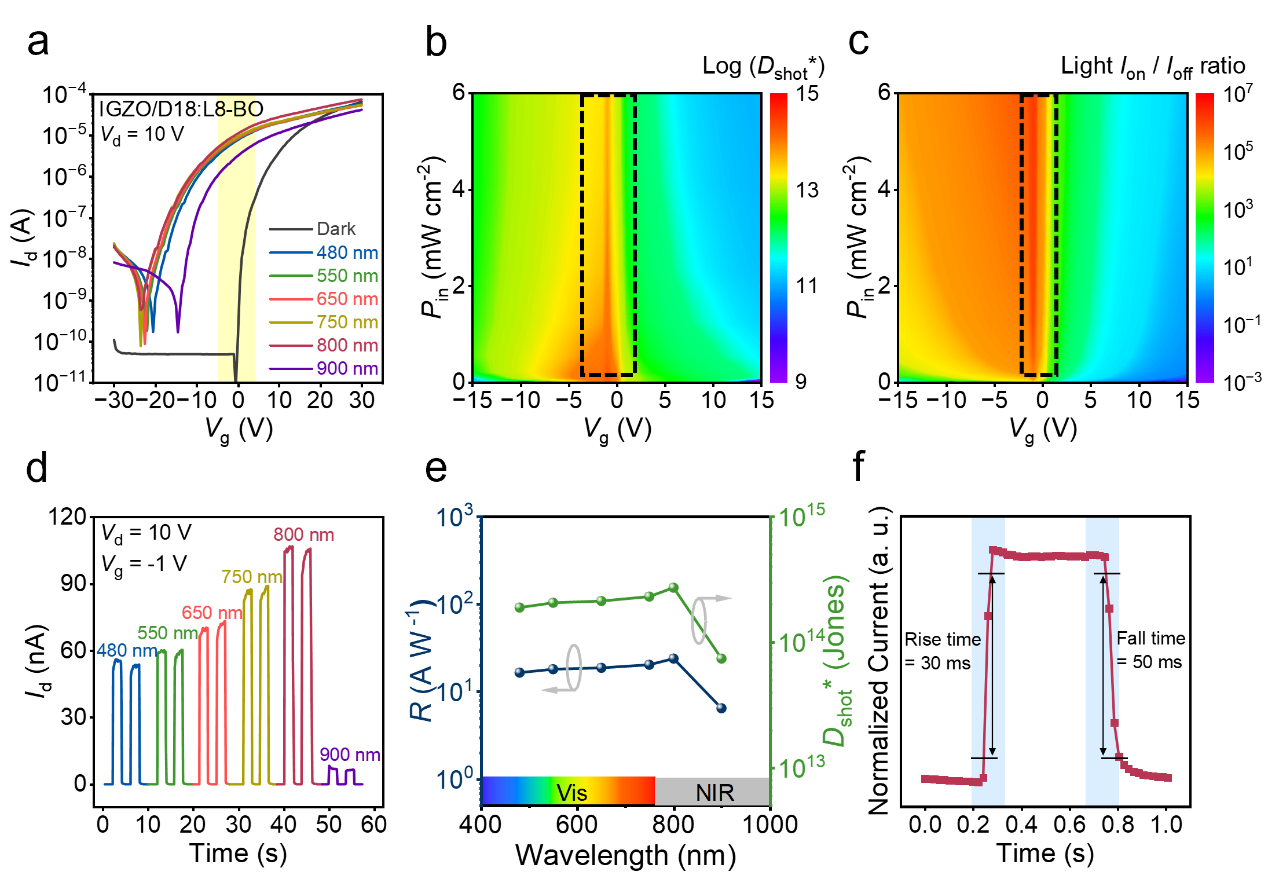
Figure 2.Highly sensitive photosensing mode under negative gate voltage
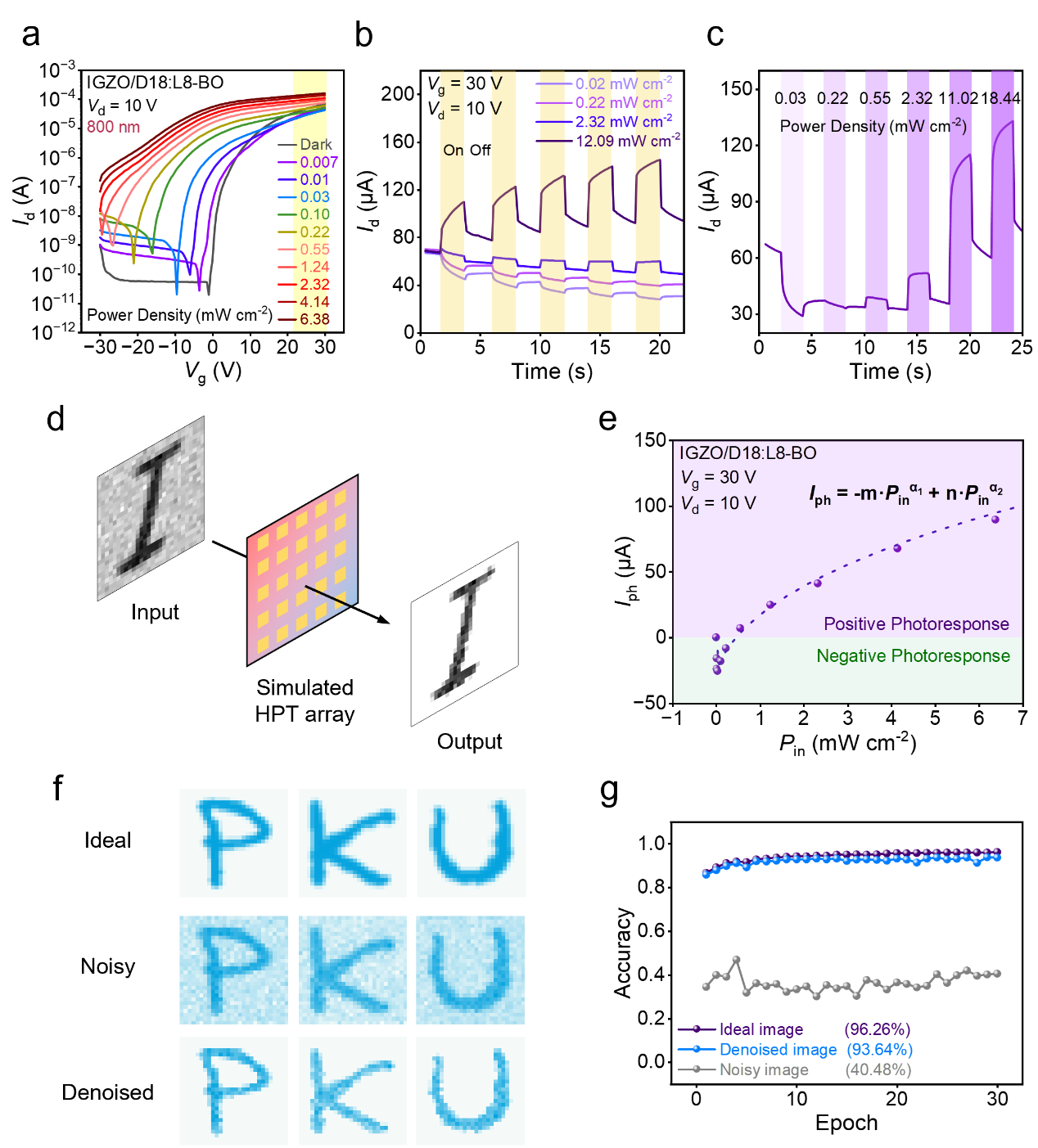
Figure 3.Light-intensity-adaptive bidirectional photoresponse and in-sensor image preprocessing function under positive gate voltage