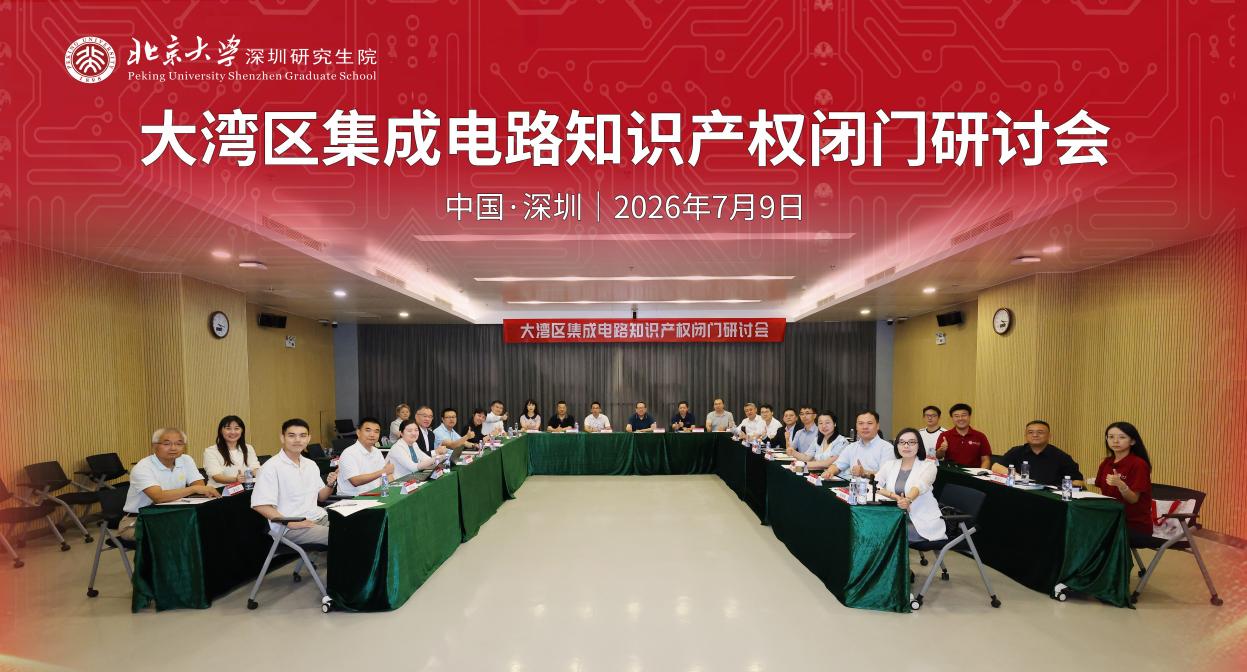
On the afternoon of 9 July, the Greater Bay Area Closed-Door Seminar on Integrated Circuit Intellectual Property was held at the International Conference Centre in Shenzhen University Town. Hosted by Peking University Shenzhen Graduate School (PKU Shenzhen), the seminar brought together dozens of officials and experts from the China National Intellectual Property Administration, the Shenzhen Municipal Administration for Market Regulation (Shenzhen Intellectual Property Administration), development and reform and science and technology authorities, universities and research institutes, industry, and the legal profession.
Participants discussed emerging intellectual property issues, potential risks and response strategies in the integrated circuit industry, while exploring new approaches to integrating technological innovation with intellectual property development.
Wang Tianbing, Vice Chancellor of Peking University Shenzhen Graduate School, delivered the welcome address. He noted that integrated circuits, as a foundation of modern industry and a key driver of the digital economy, have become a major focus of global technological competition. While China’s integrated circuit industry has demonstrated considerable resilience and vitality under pressure, it continues to face significant intellectual property challenges.
Wang introduced Peking University’s long-standing academic strengths in integrated circuit research and noted that PKU Shenzhen’s development in this field is closely aligned with Shenzhen’s “20+8” strategic emerging industry clusters. He added that the International IP Academy, jointly established by the China National Intellectual Property Administration and Peking University, is based at PKU Shenzhen, providing distinctive interdisciplinary strengths for addressing intellectual property challenges in the industry.
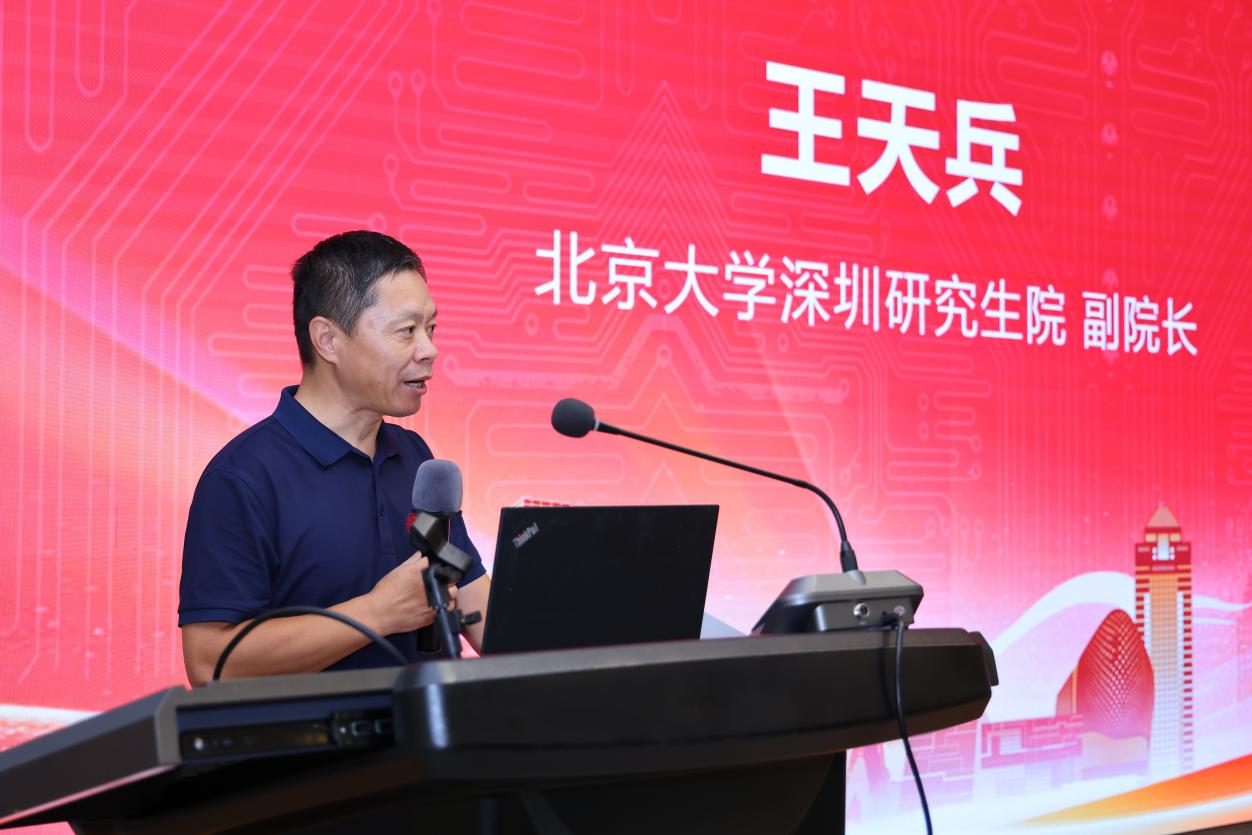
Wang Tianbing delivers the welcome address
Mo Lübin, Director of the Intellectual Property Promotion Division of the Shenzhen Municipal Administration for Market Regulation (Shenzhen Intellectual Property Administration), noted that the integrated circuit industry is strategically important to economic and social development and national security, and is a major component of Shenzhen’s “20+8” strategic emerging industry clusters. In a technology-driven industry, intellectual property has become an essential source of value and competitiveness. Mo highlighted the international competitiveness of the Shenzhen–Hong Kong–Guangzhou innovation cluster and Shenzhen’s progress in developing a strong intellectual property ecosystem. Looking ahead, Shenzhen will continue to strengthen high-quality intellectual property creation, protection, commercialisation and services, supporting both the high-quality development of the integrated circuit industry and the cultivation of internationally oriented intellectual property professionals.
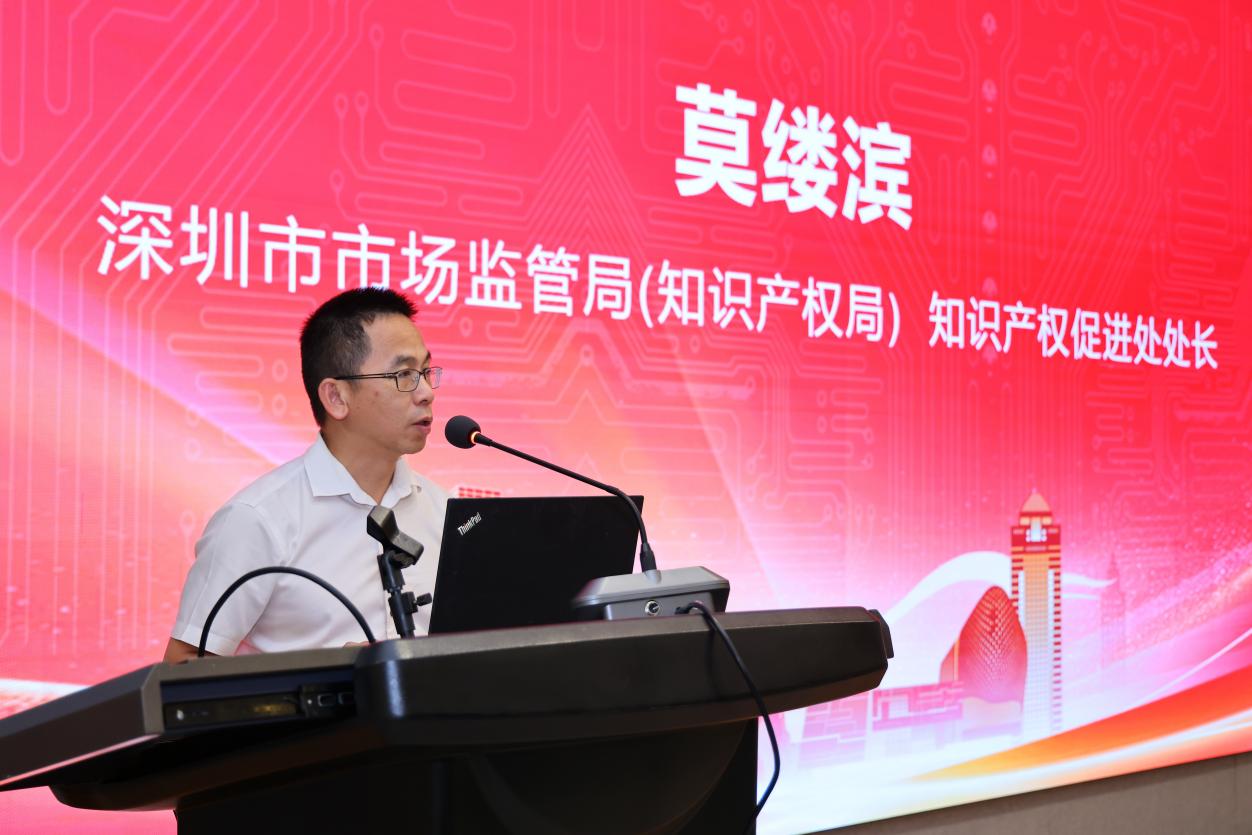
Mo Lübin delivers remarks
Wang Zhimin, Vice Chairman of the Zhongguancun High-Performance Chip Interconnect Technology Alliance, delivered introductory remarks based on his professional experience. While recognising the progress made by China’s domestic chip industry, he also examined underlying intellectual property risks. He called for more forward-looking policy and industry research, stronger development of high-value patents, and better preparation for future international intellectual property competition.
Wang Zhimin delivers remarks
Expert Perspectives on Integrated Circuit Intellectual Property
The keynote session was chaired by Shi Lili, Director of the Office of Research Affairs at Peking University Shenzhen Graduate School. Nine experts from government agencies, universities, research institutions, enterprises and the legal profession delivered presentations on key intellectual property issues affecting the integrated circuit industry.
Zhao Zhe, Head of Division II at the Development Research Center of the China National Intellectual Property Administration, noted that China’s domestic chip industry continues to face weaknesses in critical technologies, patent protection capabilities and international patent portfolios. Zhao recommended incorporating intellectual property risk management throughout the full business process and strengthening the independent development of high-value patents.
Jiang Yi, who holds a Ph.D. from Peking University Law School, described intellectual property as the “underlying operating system” of the integrated circuit industry. Jiang argued that companies should shift from an application-oriented approach towards an asset-oriented approach to intellectual property, while developing an innovation ecosystem that supports and enables collaboration.
Yang Yuchao, Dean of the School of Electronic and Computer Engineering at Peking University, observed that China’s integrated circuit industry remains largely in a defensive position in the field of intellectual property and has a relatively limited overseas patent portfolio. He proposed strengthening strategic coordination, incorporating intellectual property into the broader security framework of the integrated circuit industry, and establishing specialised research institutions in this area.
Li Xiaomin, Chairman and Founder of Wintech Nano (Suzhou) Co., Ltd., drew on his entrepreneurial experience to emphasise the importance of protecting intellectual property relating to original technologies and underlying data.
Li Weimin, Director and Founder of Beijing Weibo Law Firm, discussed emerging forms of intellectual property and examined the punitive damages provisions proposed in the draft revision of the Regulations on the Protection of Layout Designs of Integrated Circuits. Li encouraged companies to begin developing comprehensive intellectual property portfolios at an early stage.
Guo Hong, Director of the Audio-Visual and Electronic Data Forensics Research Division at the Academy of Forensic Science, presented case studies demonstrating how forensic techniques, including microscopic physical sectioning, coordinate comparison and hash-value verification, can be used to assess substantial similarity between chips.
Zhou Bin, Deputy Chief Engineer at a national key laboratory affiliated with the Fifth Electronics Research Institute of the Ministry of Industry and Information Technology, presented failure-analysis cases involving advanced packaging and heterogeneous integration. Zhou noted that new failure modes arising from three-dimensional stacked packaging are placing greater demands on analytical technologies.
Xu Jianming, Vice Dean of the School of Integrated Circuits at Sun Yat-sen University, addressed intellectual property challenges associated with MEMS processes and process design kits. Because MEMS processes are often non-standardised and fragmented, core process parameters can be difficult to protect through patents alone. Xu therefore recommended combining patent protection with trade-secret protection.
Luo Xun, Professor at Shenzhen University, discussed common challenges affecting university patents, drawing on long-term collaboration with industry. Luo suggested that university research should adopt a stronger application-oriented approach and develop modular, interdisciplinary and systematic patent innovations focused on genuine industrial needs.
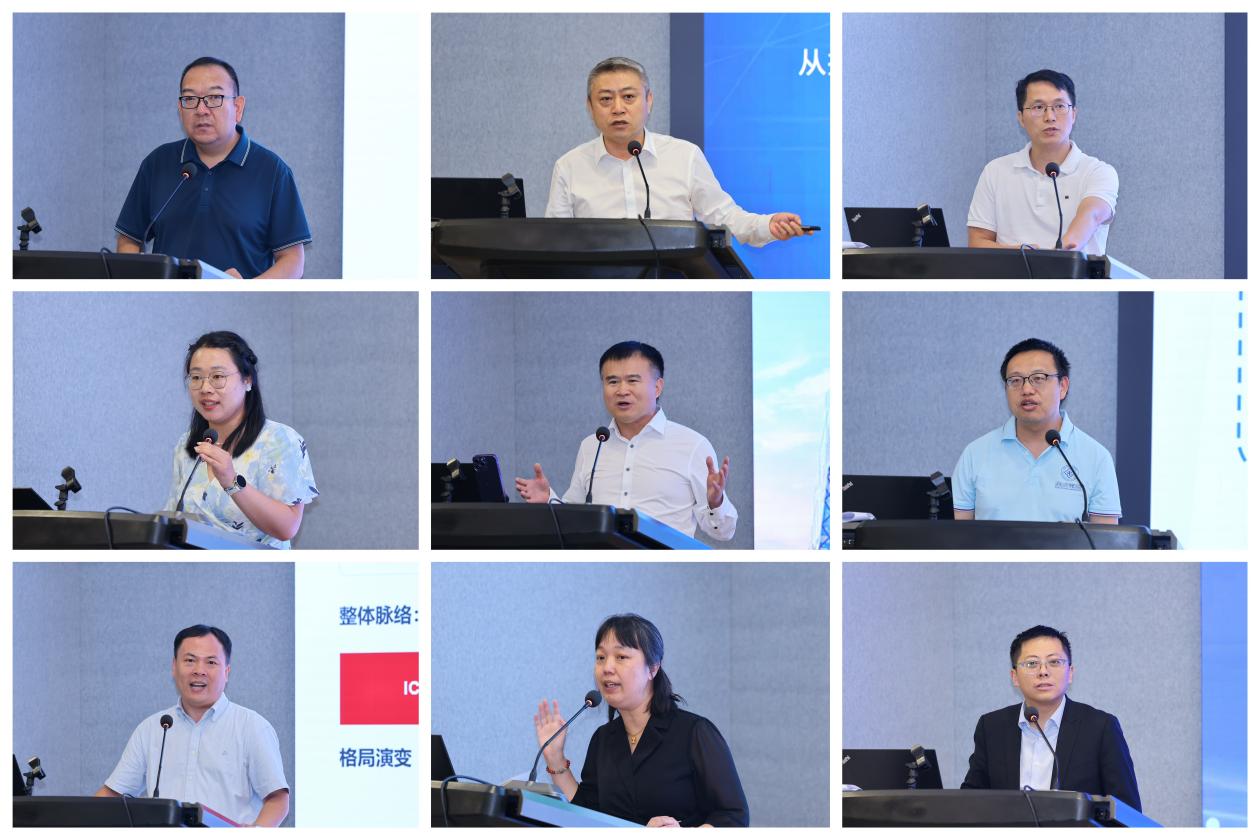
Nine experts share their perspectives
Building a Collaborative Intellectual Property Ecosystem
The roundtable discussion was moderated by Yang Yuchao. Participants included Wang Zhimin; Li Xiaomin; Shi Lili; Shen Yuanlin, Director of Guangdong Sanhuan Huihua (Shenzhen) Law Firm; and Chen Hongyu, Researcher at the School of Electronic and Computer Engineering, Peking University. The discussion focused on industry responses and potential Greater Bay Area initiatives addressing intellectual property risks in China’s integrated circuit sector. Participants agreed that the integrated circuit industry has entered a new phase in which technological competition and intellectual property strategy are increasingly interconnected. They called for coordinated action in talent development, platform construction and institutional design, as well as the development of an innovation ecosystem connecting industry, universities, research institutions and users. They also proposed establishing a specialised think tank for integrated circuit intellectual property research in the Greater Bay Area.
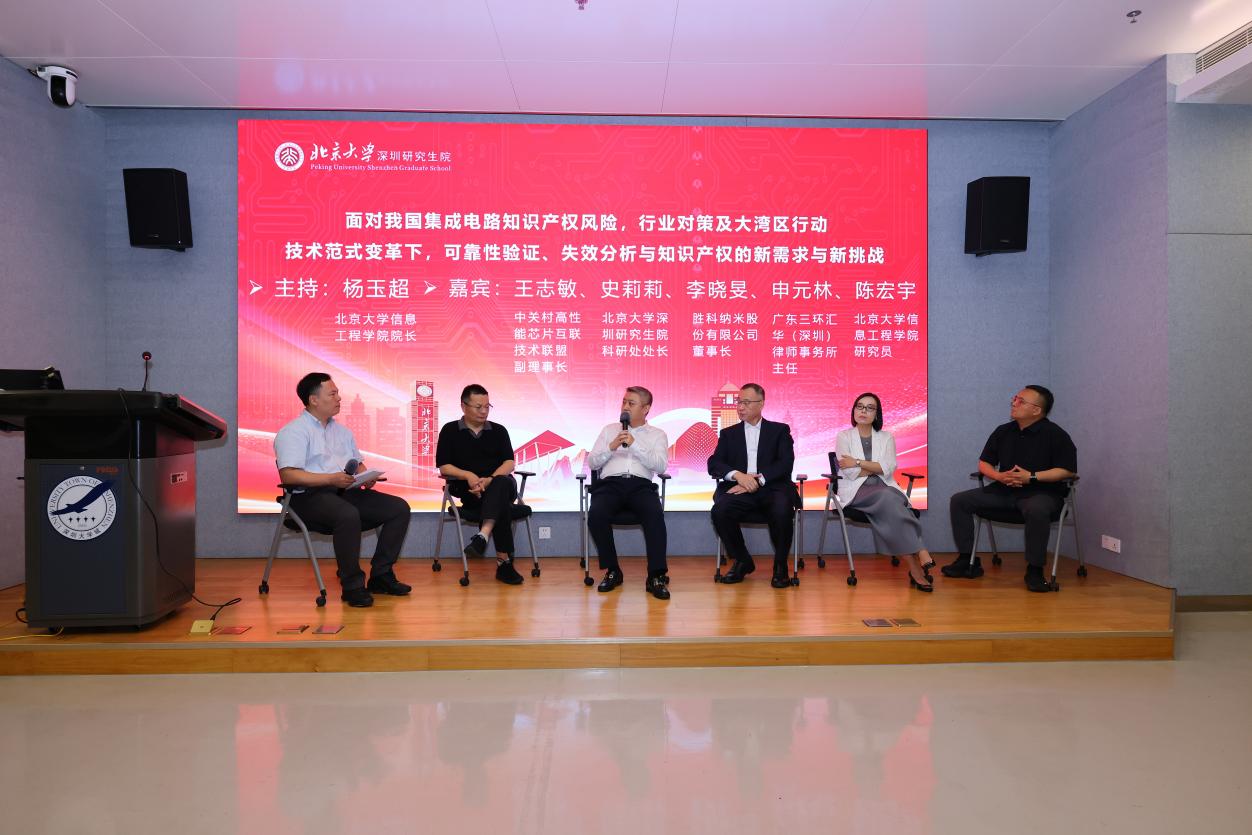
The seminar brought together representatives from government, industry, academia, research institutions and the legal profession to address practical intellectual property challenges and explore effective approaches to intellectual property governance in China’s integrated circuit industry.
Looking ahead, PKU Shenzhen will continue to advance specialised research on integrated circuit intellectual property and establish regular platforms for research and exchange, guided by its development principles of problem orientation, north–south collaboration, AI-driven development and integrated innovation. Through these efforts, PKU Shenzhen aims to contribute to the high-quality development of the integrated circuit industry.